For this documentary style photography project, I focused on three layers of Koreatown’s multicultural community: 1) a historic, Korean American, ethnic enclave community; 2) a transnational and regional center where investors see an attractive investment space; 3) a multiethnic, local community composed of residents from Central America, Mexico, and Bangladesh. The following section will describe the key events of how these three layers came to be and the historic changes that have occurred in Koreatown, most notably, the ways outside investment interests have embedded into Koreatown’s local cultural mosaic.
Koreatown as a historic ethnic enclave
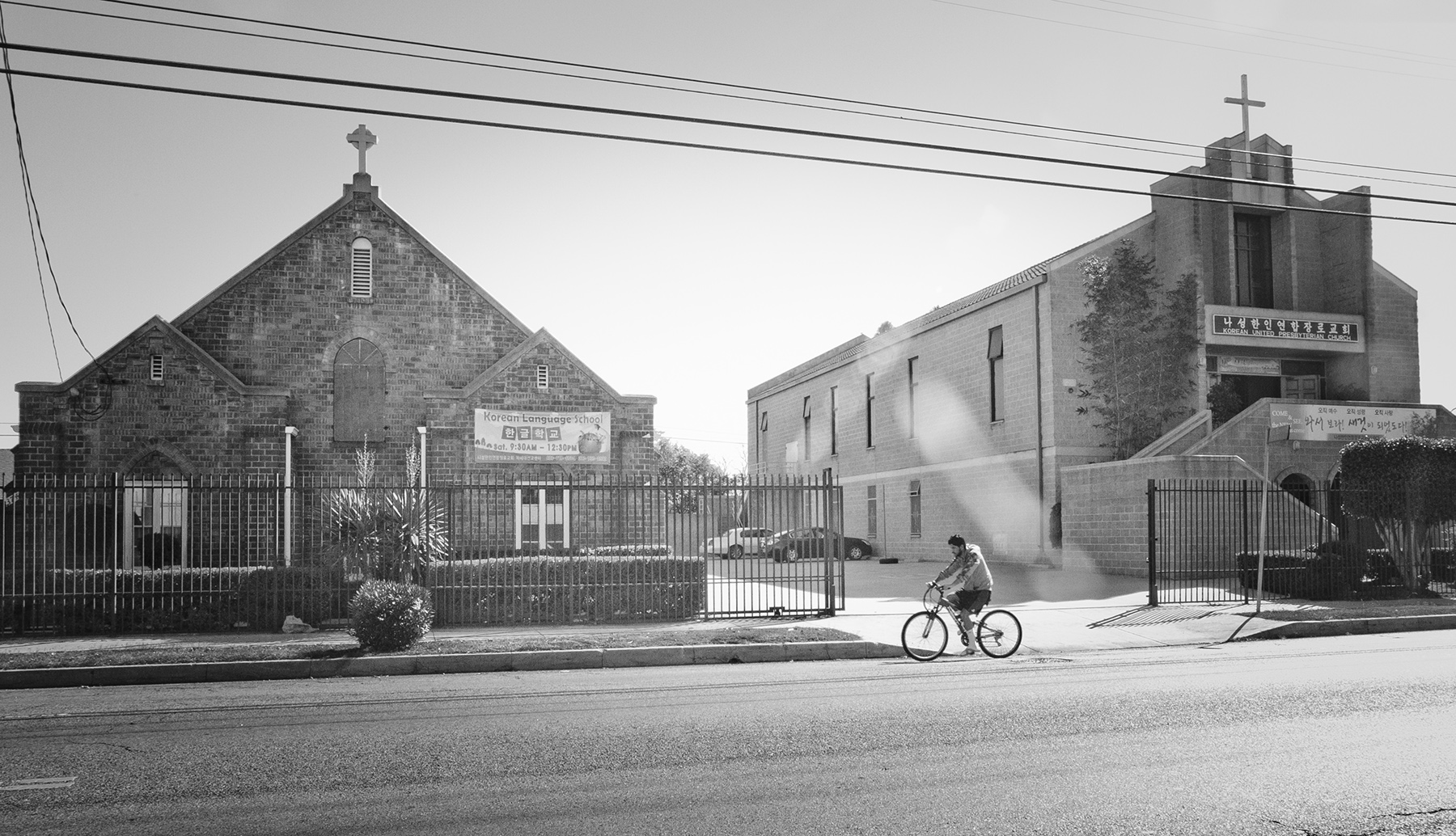
The historic Korean United Presbyterian Church on Jefferson Street was built in 1905 catering to the first Korean community in Los Angeles
Passage of the 1965 immigration act was the catalyst for the population growth that helped build the Koreatown where it is located today. However, earlier immigrants began to move to Los Angeles as early as the beginning of the century. The first wave of 7,400 immigrants arrived to the states – most in Hawaii – between the years of 1903 and 1905 to work as sugar cane laborers (Kang, 2013). While most Korean immigrants came to Hawaii, some arrived in Los Angeles by 1904. These immigrants started the first Korean gathering on Magnolia Avenue near the University of Southern California to practice Christianity and learn English. By 1906, another group of Koreans started the first Korean Presbyterian church in Downtown L.A. (Kang, 2013).
Koreans began to immigrate again to the United States in 1924. Most of these immigrants represented political refugees, activists, and “picture brides” – women sent from Korea to marry single migrant workers. These activists established political movements in the United States to protest Japanese colonization, the first organizations starting in San Francisco would represent the first political movement for Korean Americans (Kang, 2013). By 1930, the Korean American community had moved to Los Angeles where there were more job opportunities (Kang, 2013).
During this period, Korean Americans began building establishments, starting with a grocery store, a laundry, and a shoe repair shop. By the end of the decade, more establishments were built and approximately 650 Koreans lived in the area occupying Adams Boulevard to the north, Slauson Boulevard to the south, Western Avenue to the west, and Vermont Avenue to the east, south of the I-10 freeway (Kang, 2013). It is important to note why this area was occupied. The area was an older part of the city, it was racially mixed, the rental prices were less expensive, and most importantly, race restrictions were not as strongly enforced. This area would be the primary Korean American settlement until the 1960s following an increase in Korean immigration and an easing of race restrictions that would allow second generation Koreans to move out of the community (Kang, 2013).
The Immigration Act of 1965
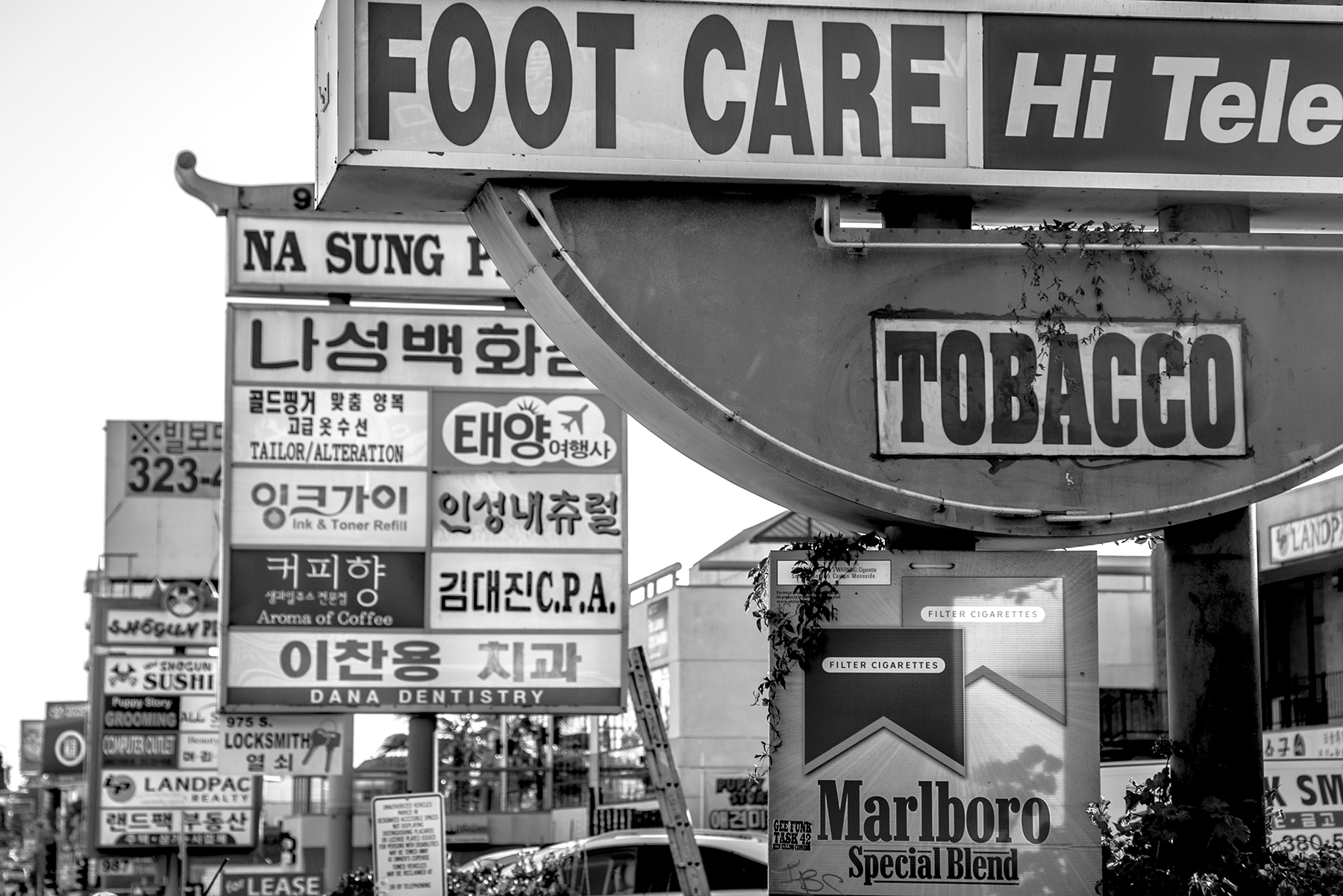
Rows of business placards display business signs catering to Korean speakers along Vermont Avenue
The end of the 1960s marked an enormous increase in Korean immigration. Between 1968 and 1970, the Korean American population had doubled from 25,000 to 50,000 with 8,811 living in Los Angeles County (Kang, 2013). This rise in population is attributed to the Immigration Act of 1965 that followed from the Civil Rights Movement, opening the door to thousands of immigrants previously barred from entry to the United States due to racist policies. The act favored the highly educated but most importantly, it provided a means towards family reunification. For the framers of the Immigration Act of 1965, it was expected that since the majority of the population was White, most new immigrants would be of European descent (Chi, 2012). Much to their surprise, however, more immigrants from Asian countries made their way to the states by taking advantage of the act.
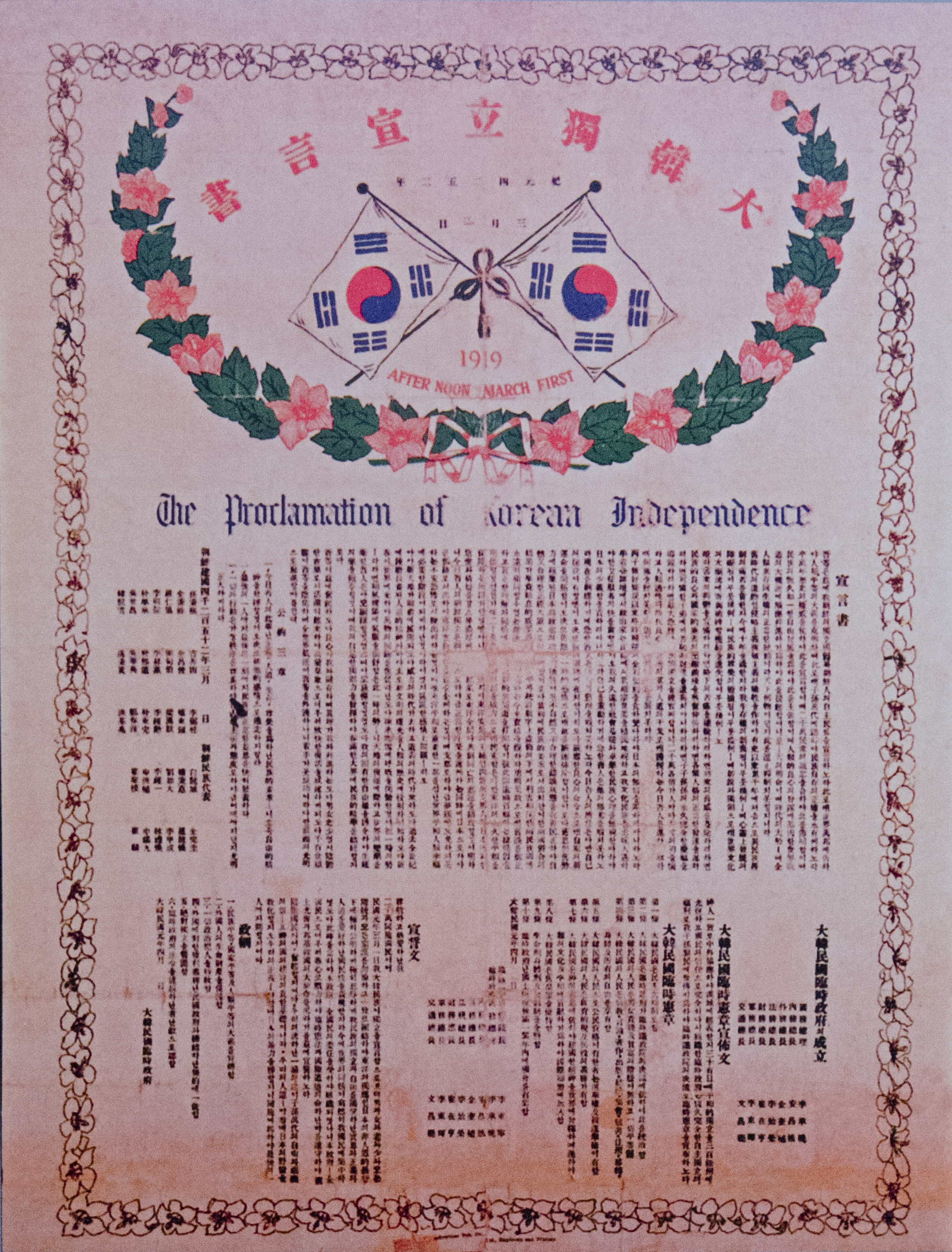
A copy of the Korean declaration of Independence displayed at the Korean National Association Museum
During the end of World War II, Korea was released from Japanese colonization following their defeat, and the Soviets entered Korea from the North while the U.S. entered from the South. Both sides agreed to have the United Nations conduct elections that would determine who would lead the newly independent Korea. However, neither side trusted each other, and the elections were delayed (Chi, 2012). As a result, the country was split in half at the 38th parallel. Between June 25, 1950 and July 27, 1953, the country engaged in a civil war after the North attempted to invade the South. The war ended in a stalemate leaving approximately 10 million families separated (Chi, 2012).
Due to the fortunate timing of the Immigration Act of 1965, three main groups would make up the bulk of the second wave of Korean American immigration. Harry and Bertha Holt established the Holt Adoption Program in 1956 after they had made national headlines for bringing 12 GI babies to the United States. Many GIs and GI families stationed in Korea would adopt orphans before returning home (Chi, 2012). Child abandonment was increasing and had reached its height in 1964 at 11,000. Meanwhile, back in the states, people were struggling to find white babies to adopt, so they saw Korean ethnic babies as a viable option (Chi, 2012). By 1961, The Holt foundation had overseen the adoption of 2,587 Korean babies.
After the war, U.S. bases were one of the few places of material abundance. Many women had to care for young siblings and sick and unemployed parents (Chi, 2012). At the time, Korea was in great poverty. Military bases provided means of employment, drawing in poor women, widows, and orphans. Women separated from their families sought refuge in the military stations resulting in the immigration of 100,000 Korean wives of American GIs between the period of 1953 and the late 80s (Chi, 2012).
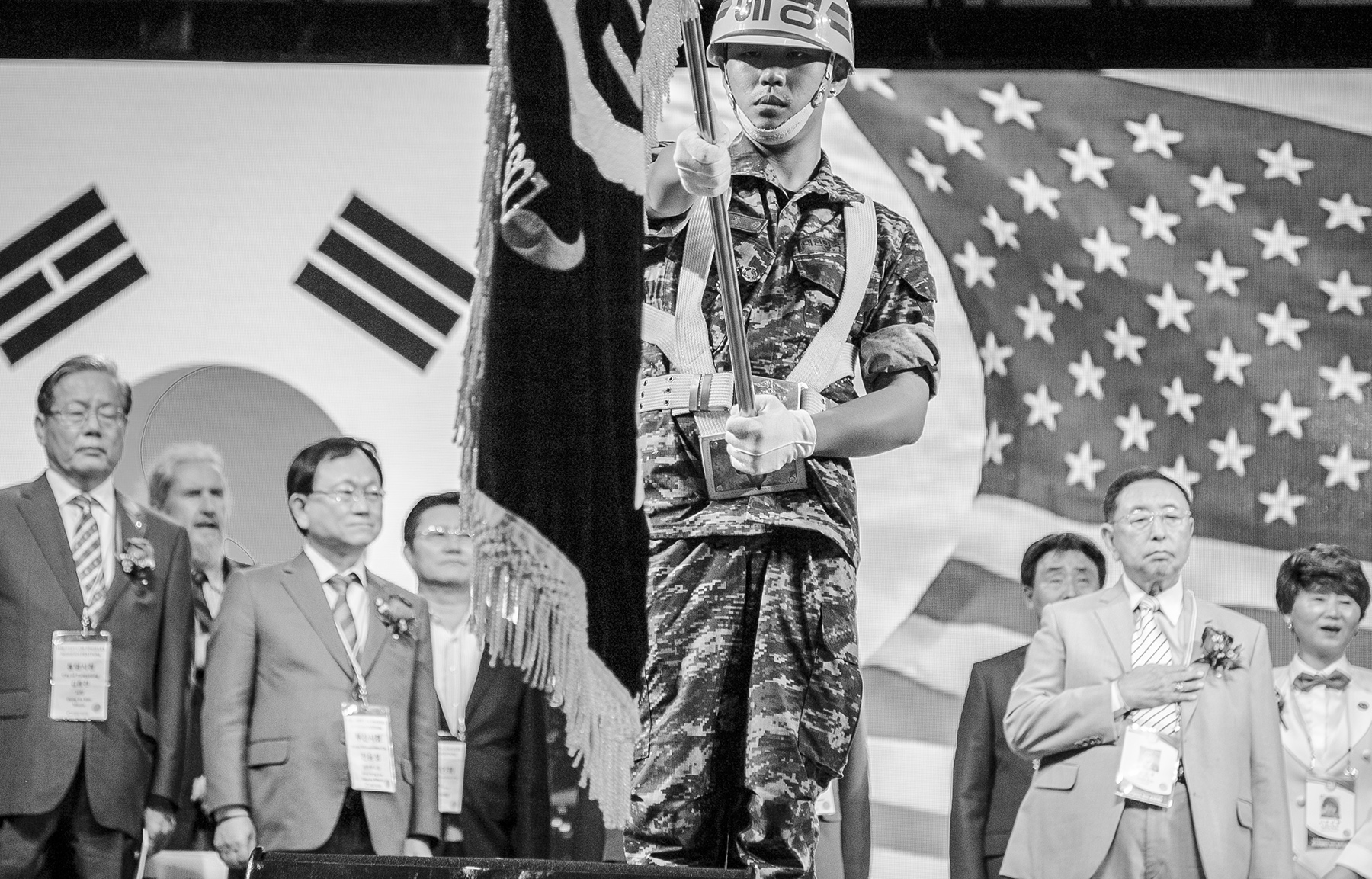
A member of the Korean Marine Corps. raises a military flag to honor both the Korean and American national anthems during the opening ceremony of the Korean Festival held every year at Seoul International Park on Normandie Avenue and Olympic Boulevard in Koreatown. The event is in its 41st year.
Finally, following a large-scale nation building program, between 1954 and 1960, the U.S. distributed approximately 2.3 billion dollars to South Korea, $60 million to go towards education programs, making it possible for 15,000 Korean students to study abroad in the United States (Chi, 2012). The programs sent American experts to help train Koreans in the fields of education, medicine, engineering, and other areas, and in turn, Koreans were allowed to enter the United States to study at American Universities. Additionally, those who chose to study in the United States were subsequently rewarded with full-time jobs as faculty in high-level administrative offices in universities and government agencies. Of that amount, less than 10 percent returned to Korea (Chi, 2012).
These three groups represented a large proportion of new Korean Americans following passage of the Immigration Act of 1965. However, not all immigrants arrived based on the provisions described above. 23.2 percent of Korean immigrants arrived under the occupation categories with an additional 11.6 percent entering as investors (Kwon and Lee, 2009). During that time, Korea was undergoing political instability. After Syngman Rhee’s government collapsed, General Chung Hee Park took control through a military coup. Under his leadership, South Korea became an export oriented economy. Despite economic growth, the number of white collar jobs did not match the number of highly educated Koreans looking for professional and managerial jobs, so many sought employment opportunities in the U.S. (Kwon and Lee, 2009).
Following the massive wave of immigration, the Los Angeles Korean American community grew to 8,811, and during this time, the original settlement began to move north towards Olympic Boulevard (Yu et al., 2004). This area became an attractive niche for new immigrants as more affluent residents and businesses began to vacate the neighborhood. By 1971, Hi-Duk Lee, a Korean American, had established the iconic Olympic Market, and few elderly Koreans remained in the old settlement south along the I-10 Freeway (Yu et al., 2004).
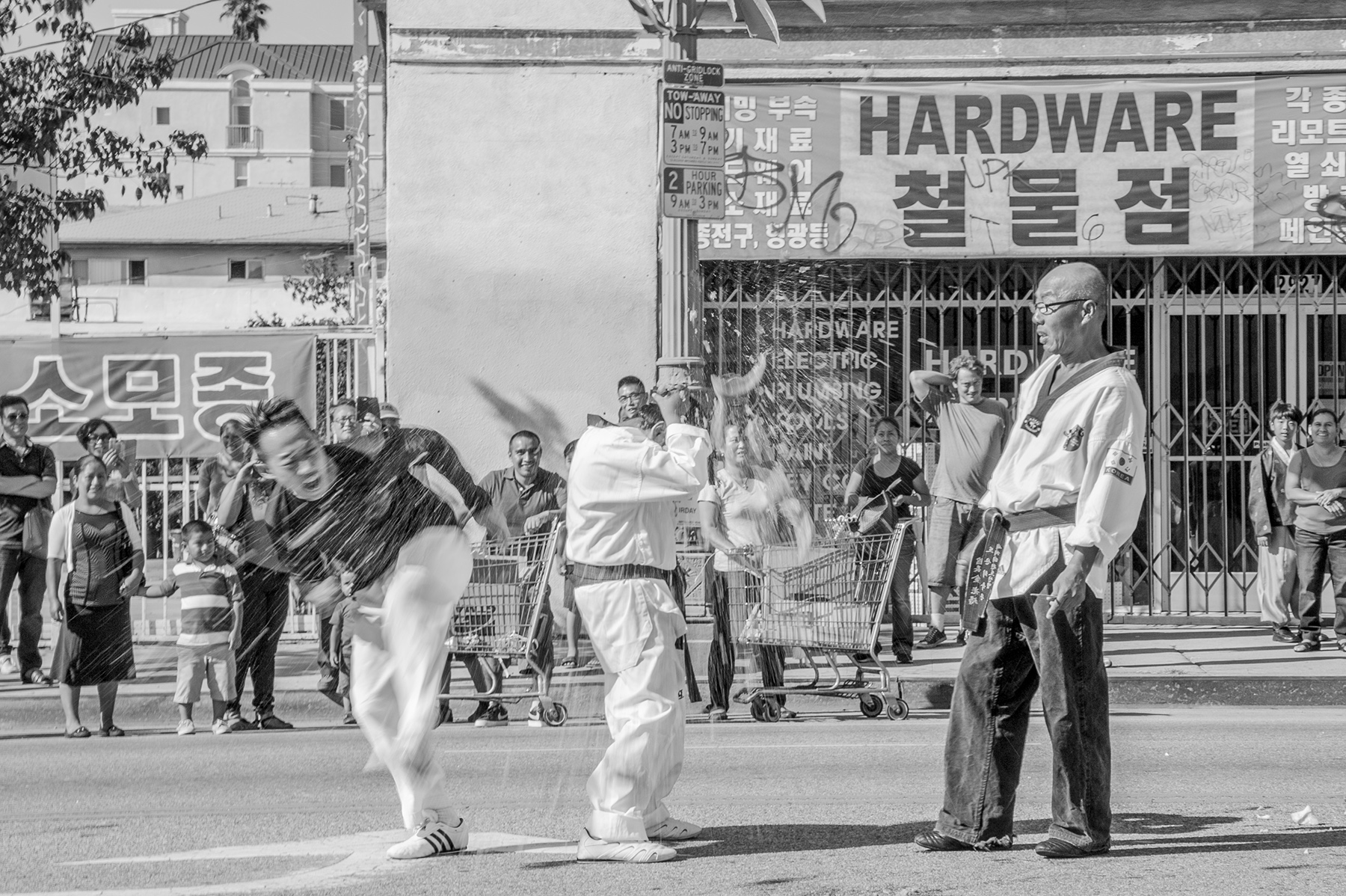
Members of a Tae Kwon Do group perform a demonstration during the Korean parade held during the annual Korean festival towards the end of September. The event celebrates Korean culture attracting hundreds of people to Seoul International Park on Olympic Boulevard and Normandie Avenue
The 1970s marked further development of the new Korean American settlement with more grocery markets, merchandise stores, banks, restaurants, doctor’s offices, cafes, and night clubs (Yu et al., 2004). In 1973, Hi-Duk Lee and other members of the community started the Koreatown Development Association, initiating a campaign to install Korean language signs on Korean-owned stores. The following year, the organization started the first Korean Street Festival (Kang, 2013). What’s more, the area saw a growth in media organizations in magazines, radio, and television (Park and Kim, 2008). By the late 70s Koreans were operating the majority of local businesses within the boundaries of 8th Street and Hoover Street, from the North and South, and Western and Vermont, from the West and East. By the 1980s Korean immigration was at its highest, with 15,011 living in Koreatown (Yu el al, 2004).
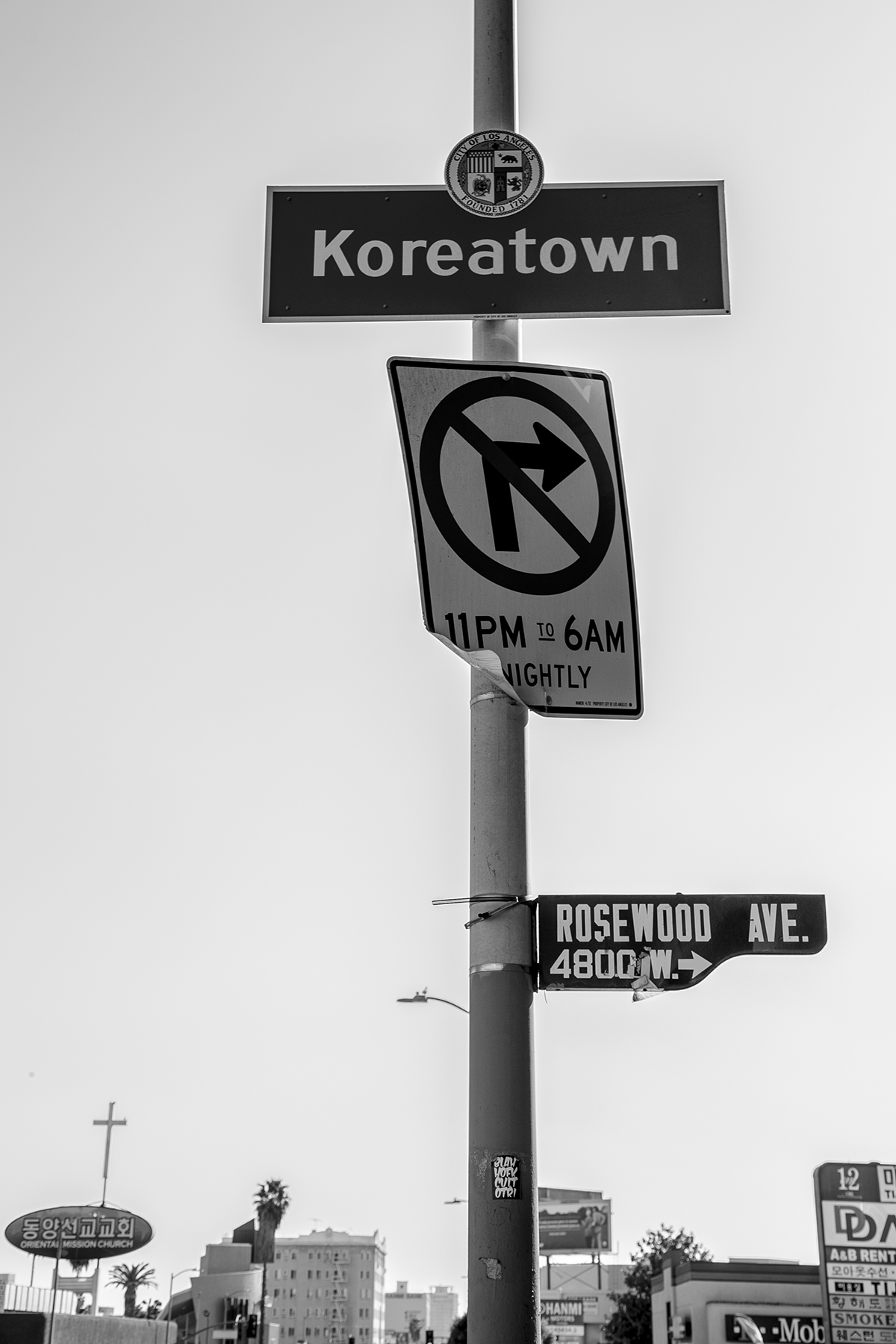
A Koreatown street placard welcomes drivers from the Northern entrance to the area on Rosewood Avenue
The 1980s provided additional opportunities for business expansion and Korean American spatial identity development. In 1982, the town was successful in lobbying to install a “Koreatown” sign on the Normandie Avenue and Western Avenue entrance of the I-10 Freeway, a significant marker of Korean American spatial identity (Park and Kim, 2008). Additionally, large American corporations like Union Bank, Texaco, IBM, and Getty Oil began moving out of the areas containing Wilshire Boulevard and Sixth Street, providing additional vacant lots for more Korean American entrepreneurs to move in (Park and Kim, 2008). During this period, immigrants from El Salvador and Guatemala began to move in to the area as well, escaping wars in their home countries in search for greater opportunities while more and more, second generation Korean Americans began moving out to suburban areas (Sanchez et al., 2012).
Koreatown as a multicultural community
Following the passage of the 1965 Immigration Act, the Latino population had grown by 34% between the years 1960 and 1980 (Zhou, 2009). The largest influx of Latinos came from Mexico following an economic crisis driven by income inequality. The Koreatown area also received a large influx of immigrants from Central America, which was experiencing civil wars driven by Cold War policies, most from Guatemala and El Salvador (Smith, 2003). Following their arrival, many Latino migrants became workers in Korean owned businesses, many of whom sought out undocumented migrants as affordable labor. Prior to the arrival of Latinos to the area, Korean business owners relied upon family members as a labor supply (Smith, 2003). As a result, many of the workers moved to the area to live in the affordable rental housing located near their work contributing both, to the area’s multiculturalism and also an atmosphere of class antagonism spurred by worker-owner or landlord-tenant relationships (Smith, 2003).
It is easy to believe that Koreatown is primarily a “Korean” space, evidenced by the proliferation of Hangul signage and Korean American commercial dominance. Koreatown is actually a multicultural, multiethnic place, consisted of a variety of cultural, ethnic groups of people. Between the years of 1990 and 2000, the Korean population in Koreatown increased by an additional 11,922, the largest increase that area had experienced. However, Latinos also experienced a similar growth of 11,176 (Yu et al. 2004). Although, commercially dominant and growing, Korean Americans are not the majority population by residence. Between the years 1990 to 2000, the population of Latino residency had grown to 51 percent of the total by the end of the decade with Korean Americans representing approximately 20 percent (Yu et al. 2004). The observation brings to light the lack of social visibility for certain underrepresented populations juxtaposed with a seemingly homogenous environment.
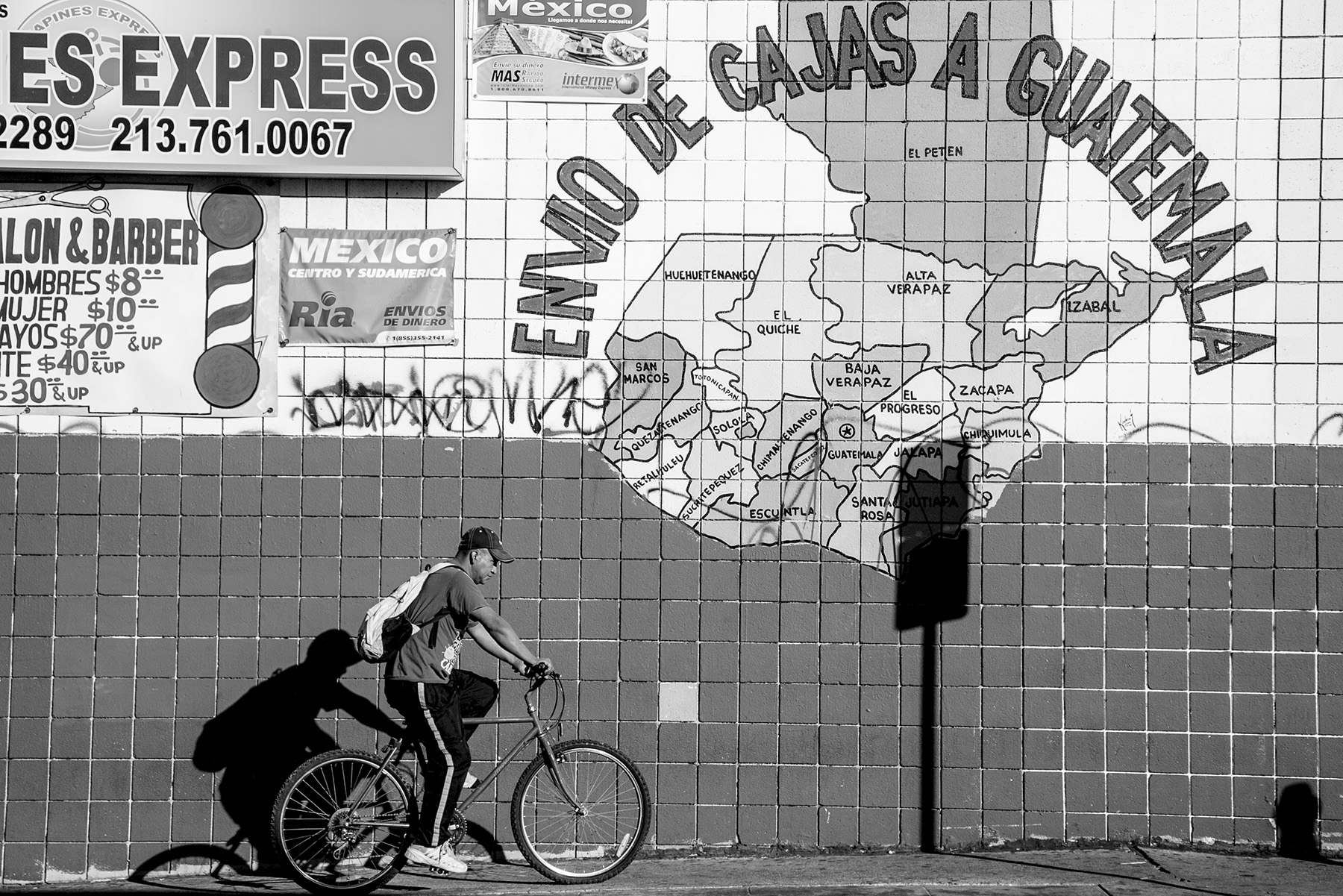
A large mural showing a map of Central America alongside advertisements aimed toward Mexican Americans are displayed on the building of a barber shop on the corner of Edgemont Street and Beverly Boulevard.
Koreatown’s Southeastern most borders are geographically located adjacent to a significant Salvadorian community on Pico Boulevard and Vermont Avenue. However, many Salvadorians are spread throughout the area as well. Salvadorians arrived as early as the late 1960s with one of the first restaurants called El Migueleno opening on Vermont Avenue in 1969 (Shyong, 2012). However, the most significant population arrived in the 1980s as refugees escaping civil war in their country. The 2010 census reports a significant population of Salvadorians at 350,000 living in Los Angeles (Shyong, 2012).
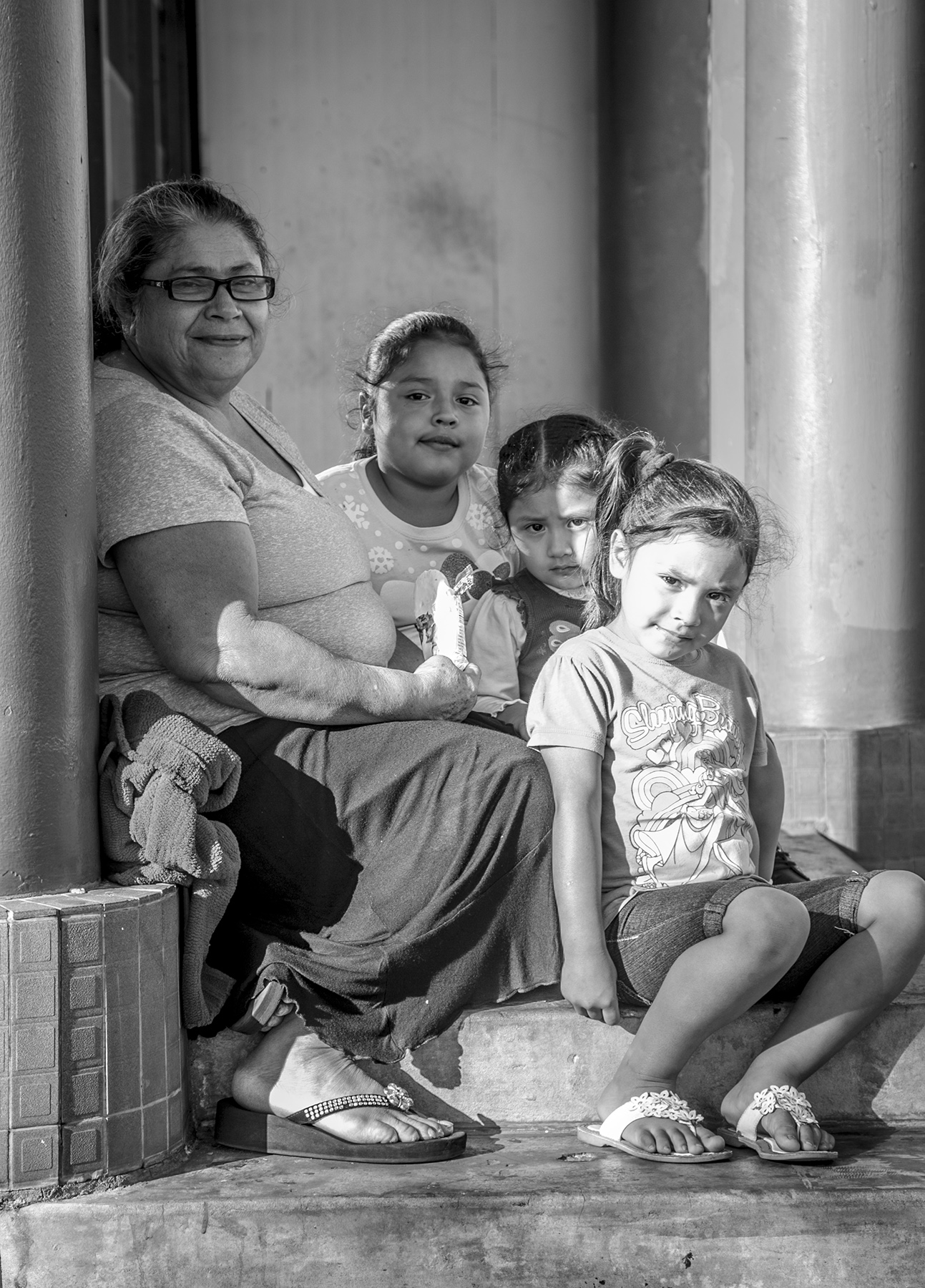
Martha and her granddaughters (from foreground to background), Tatalina, Esther, and Martha. They are from El Salvador
When the Salvadorians arrived, they arrived to an established Mexican American community. In particular, Koreatown is home to a large community of Oaxacans, with population estimates between 60,000 and 200,000. Most of the Oaxacans living in Koreatown are Zapotecos, part of Oaxacas 16 Indian groups from Sierra Juarez (Quinones, 2001).
Additionally, a significant Bengali community moved to the area on a four block stretch of Third Street between Alexandria Avenue and New Hampshire Avenue during the 1980s. This area, designated as Little Bangladesh, has about a dozen Bengali shops, restaurants, and grocery stores, while most of the stores in that area cater to Central American and Korean speakers (Abdulrahim, 2010). Although, the area of Little Bangladesh, which is still within the boundaries of Koreatown, houses only about a dozen establishments, the population of Bengalis who live and work in the area is more spread out throughout Koreatown and other areas with about 20,000 living in Los Angeles (Abdulrahim, 2010).
The Riots
The Los Angeles Riots were a significant event to the community, representing both symbolic change and a pretext to structural transformation to Koreatown. The riots referred to by the Korean American community as “Sa-I-Gu” – meaning 4-29, left 52 people dead, 16,000 arrested, and nearly 100 billion dollars in destroyed property. 12,545 people were arrested during six days of rioting between April 29th and May 5th, 1992, mostly in the areas of Koreatown (Chang and Diaz-Veizades, 1999). Additionally, 2,000 people were arrested and 1,000 buildings were destroyed (Kang, 2013). Many believed the riots were caused by the acquittal of four white police officers following their highly publicized beating of Rodney King. However, the event was only the spark to a bigger issue. Larger social forces of underrepresentation and spatial contest emerged from the highly publicized but misunderstood unrest.
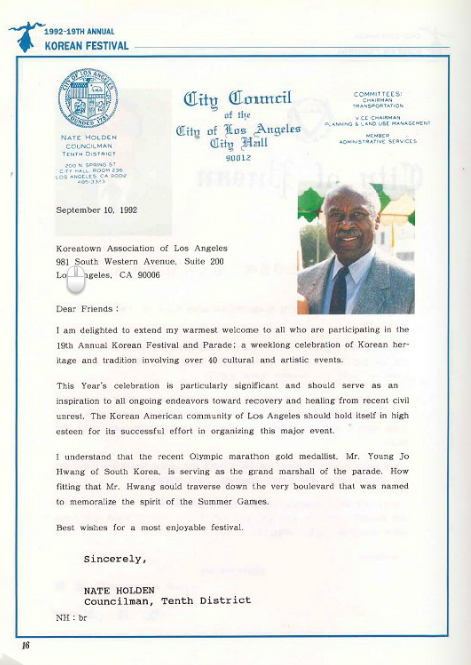
A letter from former City Council member Nate Holden addressing the Los Angeles riots printed in the 1992 Korean Festival guidebook
Tangherlini argued that the riots were really about place and spatial practice. Those who participated in the riots and looting were in fact posing a direct challenge to the spatial practices of a self-defined ethnic community (1999). Koreatown had been undergoing an enormous growth in transnational capital. However, global economic restructuring had contentious implications by promoting a singular view of Koreatown. “New kinds of networks – physical and virtual – subvert ‘traditional’ formations, deconstructing and recomposing them in more complex ways… Established forms of urban community, culture and sensibility are disrupted” (Tengherlini, 1999). The ubiquitous Korean signage served to provide a strong impression of a Korean neighborhood. By destroying the institutions that marked the area as homogenous, spatial practices became disrupted as well and by implication, its monolithic identity. Tangherlini writes:
Immediately after the riots, large parts of Koreatown no longer bore the markers that identified area stores and businesses as predominantly Korean American owned or serving a Korean heritage clientele. Instead, landmarks had disappeared from the landscape making previous patterns of circulation and day-to-day navigation irrelevant. (1999)
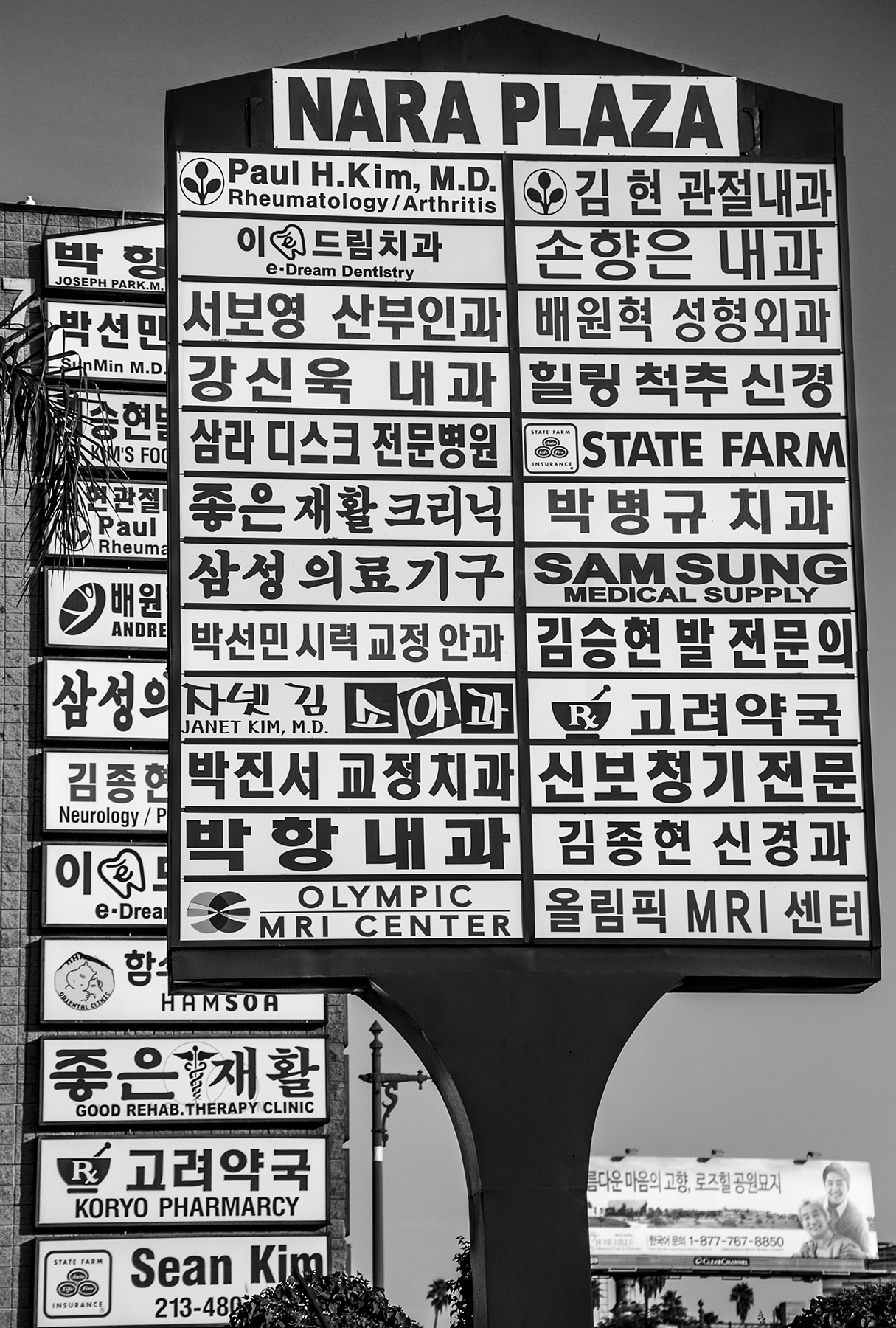
Business signs catering to Korean speakers on Berendo Street and Olympic Boulevard
The riots showed that the disruption of singularly defined establishments, the image of a solely Korean space was an implied discursive act of re-negotiation and social re-positioning. What’s more, the destruction of thousands of Korean American establishments in Koreatown cleared space to allow for redevelopment. The redevelopment process was slow with no significant transformations occurring for nearly a decade following the riots (SCAG region, 2008). However, the City began to approve redevelopment plans redefining the area as a regional center.
In 1995, the City of Los Angeles created the Wilshire Center / Koreatown Redevelopment project area, a general planning framework to designate Koreatown as a regional center – meaning an area with a focus in regional commerce, and a diversity of uses such as corporate and professional offices, residential establishments, retail commercial malls, government buildings, and health and entertainment facilities (SCAG region, 2008). The following year, three Metro Line stops opened in Koreatown. In 1998, the City Council adopted the Mixed-Use Overlay District Ordinance that would create incentives for developers to build affordable housing near transit lines. In 2000, the Metropolitan Transit Authority began operating rapid buses on Wilshire Boulevard, and the following year, the City Council adopted two major area plans for Wilshire Boulevard, Vermont Avenue, and Western Avenue (SCAG region, 2008).
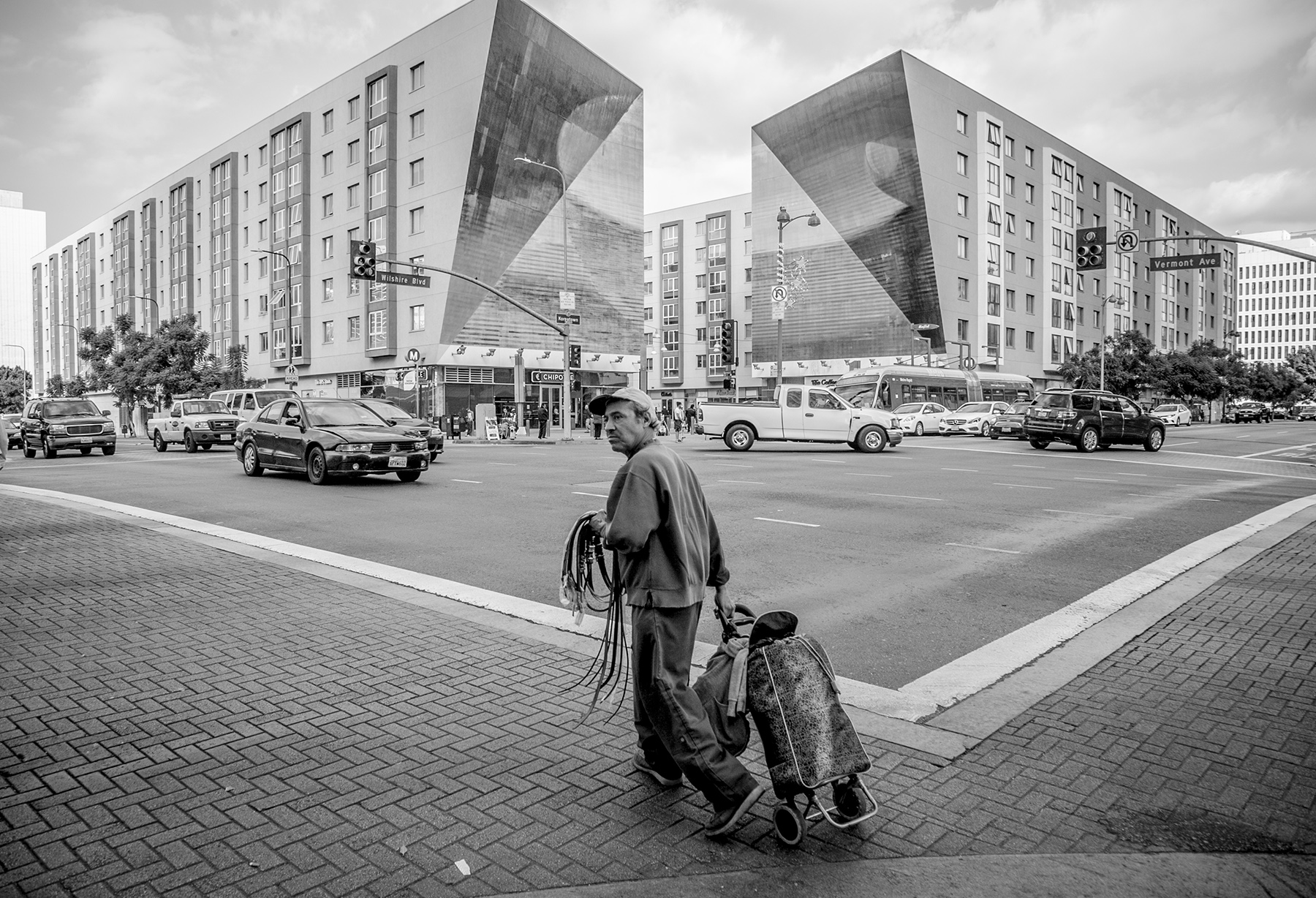
A man selling belts crosses the street at the corner of Vermont Avenue and Wilshire Boulevard across from the Vermont Metro Station. A luxury apartment complex surrounds the Metro Station entrance
Although, these changes marked many positive outcomes for Koreatown, the redevelopment process has been slow to represent the needs of other layers of overlapping cultures who are represented in the area. Many residents of Koreatown share common themes of struggle, such as poverty, gentrification and rising costs of rent, goods, and services, as well as a fear of displacement. The following section will briefly describe contemporary Koreatown as it is experienced today.
Koreatown as a transnational and regional center
Lee and Park argued that global economic restructuring and transnational practices become embedded in local situations, interacting with the networks of a local community (2008). Particularly with Koreatown, the place has served as a “social incubator” to gain experience in small business, develop ethnic networks, and accumulate capital for the express purpose of starting one’s own business when the time is right (Lee and Park, 2008). Additionally, following the riots, the City of Los Angeles began a new phase of redevelopment planning that would eventually transform the community. To this day, several parts of Koreatown are undergoing project phases by developers, both transnational and domestic, to build upscale shopping malls, multipurpose sports facilities, and luxury condominiums among a variety of development plans. (Oh and Chung, 2013).
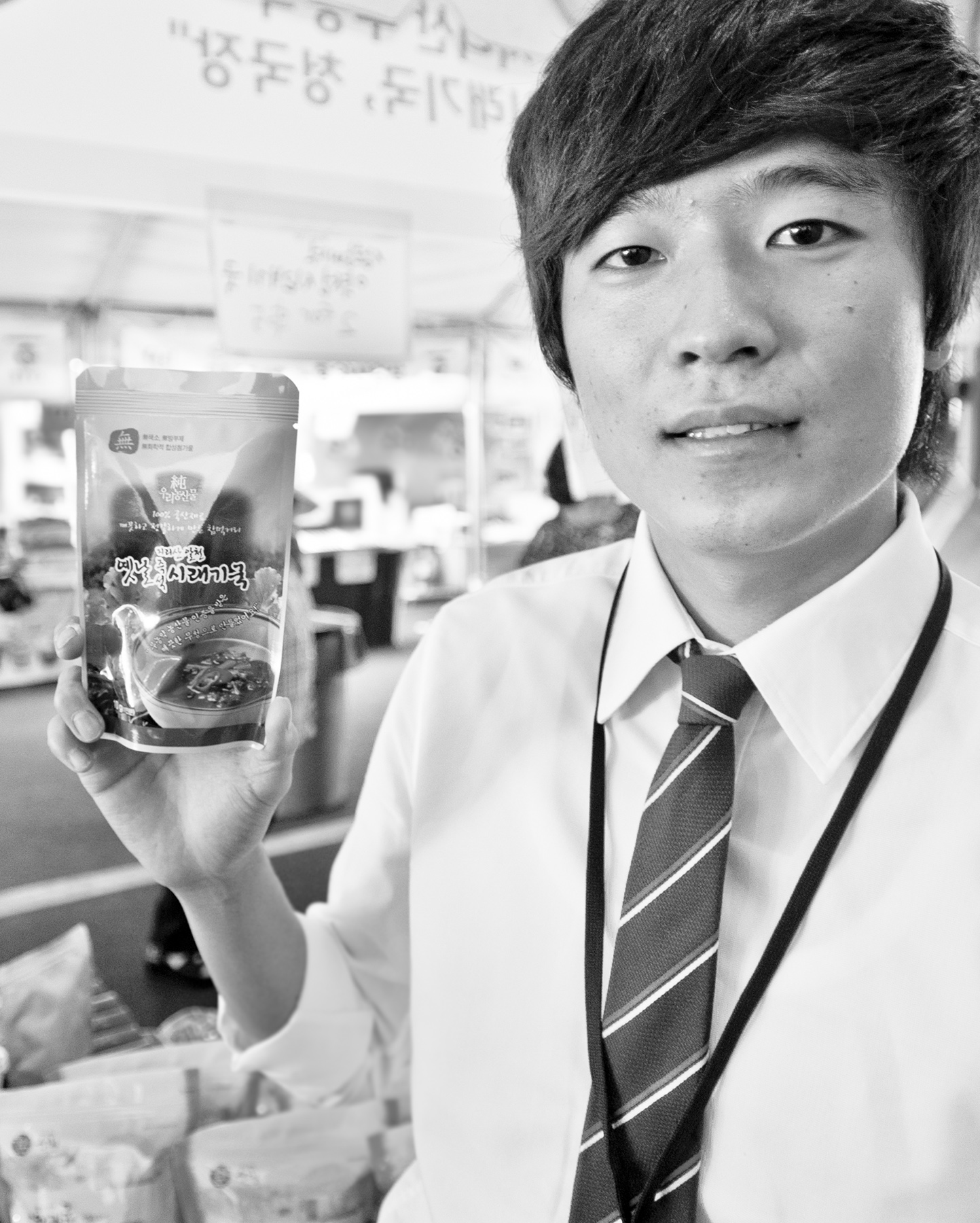
Oh Changhee, an economics student from Jin Ju, South Korea at the 40th annual Korean Festival in Koreatown. He is part of a program that incubates students to become experts on trading. He and his friends traveled to Los Angeles to practice sales in a foreign environment. His entrepreneurship program lasts three months where afterwards, he is expected to travel to other countries to participate in exhibits to share what he learned. He is holding a dry radish soup he and his two colleagues are selling at their table.
Current census data shows that between the years of 2001 and 2010, Korean immigration under the provisions of “employment based preferences” surpassed the provisions of family reunification, the early provisions that were responsible for the second wave of Korean American immigration and the early settlement of Koreatown. The census data reported that 89,201 Koreans immigrated under the immigration act of 1965. Whereas, more Koreans now enter under the provisions of E-2 and EB-5 investment Visas. The 2010 census reported 110,630 Korean Americans immigrating to the United States under employment based preferences (Chung, 2013). What’s more, foreign born Koreans outnumber U.S. native Koreans by almost double, 63.7 percent versus 36.3 percent, respectively (Chung, 2013).
When South Korean transnationals make investments in community infrastructures like residential properties, restaurants, coffee shops, factories, and strip malls, they are then eligible to apply for either the E-2 or the EB-5 investment Visas, depending on how much they were willing to invest (Park and Kim, 2008). The E-2 Visa requires the applicant to have made a “substantial investment”. Earlier figures reported investments at a minimum of $150,000 to $250,000. More current figures require more than $1 million (Park and Kim, 2008). In contrast, the EB-5 Visa requires a minimum of a $500,000 investment but provides the opportunity for permanent residency. The authors report that in 2004, those with E-2 Visas brought over $600 million to the U.S. in investments, a small portion of the $40 billion total in overseas investment from South Korean companies (2008). South Koreans value global investment. However, the authors further note that two-thirds of investments were made by large corporations, with few individual investors.

Han So Young, a student from Jin Ju and participant in the business incubation program through her university at the 40th annual Korean Festival in Koreatown
Contemporary Koreatown now houses a large variety of commercial establishments. Following the riots, Koreatown and mid-Wilshire lost much of its property value, by the end of the decade, Korean American investors owned an additional 3.5 million square feet of commercial property in mid-Wilshire (Park and Kim, 2008). Additionally, eight California-charted Korean banks reside in Koreatown along several blocks of Wilshire Avenue with combined assets totaling $9 billion from 2008 figures, representing a current growth of 295 percent (Oh and Chung, 2013). Stores and restaurants destroyed in the riots were replaced by a variety of entertainment venues: bars, cafes, pool halls, karaoke rooms, and other nightlife amenities. Local police report over 500 nightlife establishments in Koreatown. Additionally, the authors report that Koreatown has 498 liquor licenses, a 300 percent increase over Beverly Hills. Other luxury amenities create a space that provides the feel of a “mini-Seoul” such as an indoor golf course and spas with expensive membership prices. (Park and Kim, 2008).
Additionally, the Wilshire Center / Koreatown Redevelopment project area had designated for several new establishments. Between 2000 and 2006, 2,000 luxury condominiums and shopping and entertainment complexes were slated to be built in the area (SCAG region, 2008). In July, 2014, Capri Capital, based in Chicago, purchased the Vermont for $283 million, a new high-rise apartment and retail complex in Koreatown. The complex boasts a $1 million dollar chandelier and a 24-hour doorman meant to provide the feel of a high-end hotel with average rental costs between $2000 and $3000 per month. Chairmen of Capri, Quintin Primo chose the area because of its potential to attract young professionals. “Its multiculturalism is increasingly attractive to young people who enjoy things new and different,” said Primo in a Los Angeles Times article (Vincent and Khocri, 2014). Bordering two metro transit lines, one on Western Avenue and another on Vermont Avenue, developers see the area’s potential as transit space providing access to and from other areas of Los Angeles. “Koreatown is one of the fastest-growing, transit-oriented neighborhoods in Los Angeles and proximate to all things L.A. – downtown, Hollywood, and the Miracle Mile,” said Javier Rivera, a property broker of the real estate firm that represented the builder of the Vermont, J.H. Snyder Co. (Vincent and Khocri, 2014).
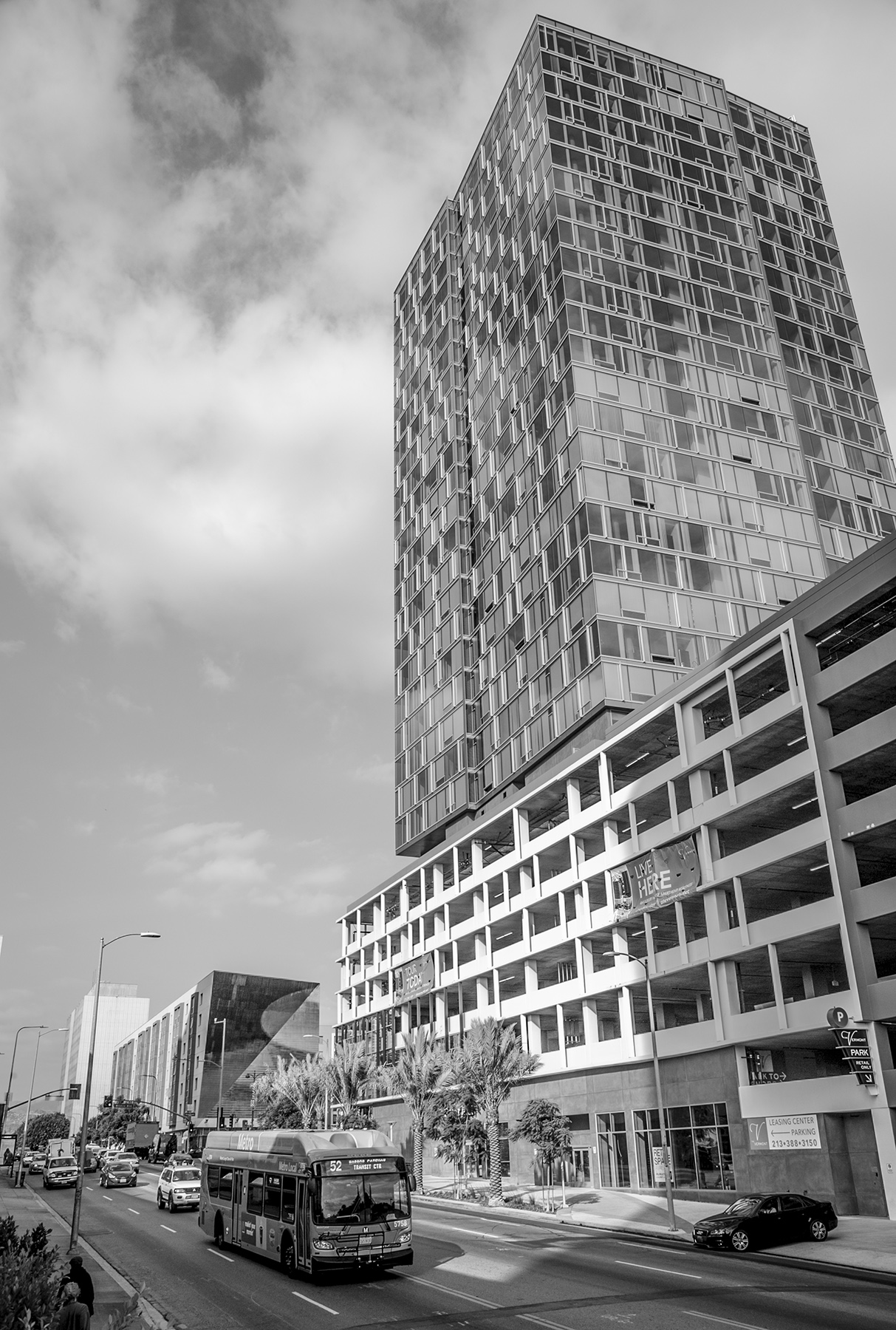
The Vermont luxury condominium complex across the street from the Metro Station on Vermont Avenue and Wilshire Boulevard
Although, the recent wave of transnational and domestic investment and attention by outside developers is symbolically positive for Korean Americans as markers of progress, Kang argued that transnational capital is not necessarily sensitive to the economic needs of the multi-ethnic, multi-class community it is transforming (2013). Community residents are in fact suffering on many levels through wage theft, discrimination, lack of affordable housing, and high levels of poverty.
Sanchez et al. reported that nearly half of the Koreatown residential population (46 percent) lives below 150 percent of the Federal poverty line (adjusted for inflation). In the decade of 2001 and 2010 when transnational growth was at its highest, the percentage of working poor increased from 11 to 17 percent, and nearly 40 percent of employed workers between the ages of 25 and 64 were without health insurance (Sanchez et al., 2012).
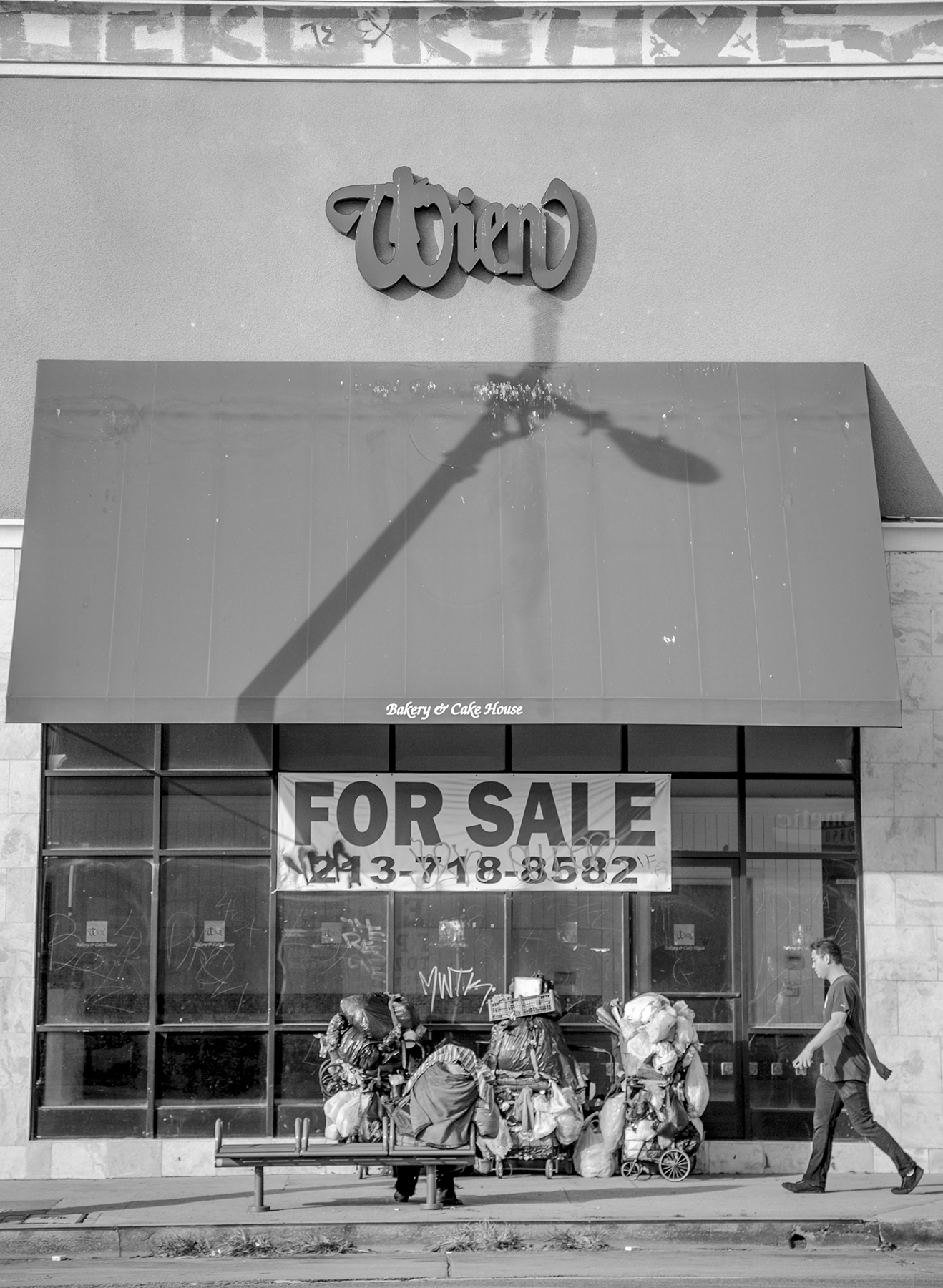
The now closed Wien bakery is a Parisian inspired pastry shop, one of several located throughout Koreatown
As Koreatown has seen an increase in renovation, the property value has also increased beyond levels affordable to its residents. As developers build more affluent housing, low-income housing declines and gentrification becomes a looming threat. The authors found that between 1997 and 2007, there had been a total of 268 apartment demolitions in Central Los Angeles including Koreatown. In contrast, there has been a steady rise in the number of permits authorized to convert apartments into condominiums. In 2002, only four permits were issued to convert apartments into condominiums. In just five years, there were 48 permits issued for conversion (Sanchez et al., 2012).
These domestic and transnationally funded renovations have nearly quadrupled the median home value in Koreatown from $100,764 in 2000 to $420,000 in 2006. Similarly, rental properties have increased in value from $176,800 in 2000 to $519,740 in 2007 (KIWA, 2009). The results of KIWA’s survey of 102 residents living in Koreatown found that 96 percent of respondents were renters, 41 percent earned less than $1000 per month, 58 percent pay half or more of their income on housing, and 47 percent live in overcrowded housing (KIWA, 2009). Additionally, the authors found that “low income residents experience extreme pressure to move as property values increase along with their rent” (KIWA, 2009).
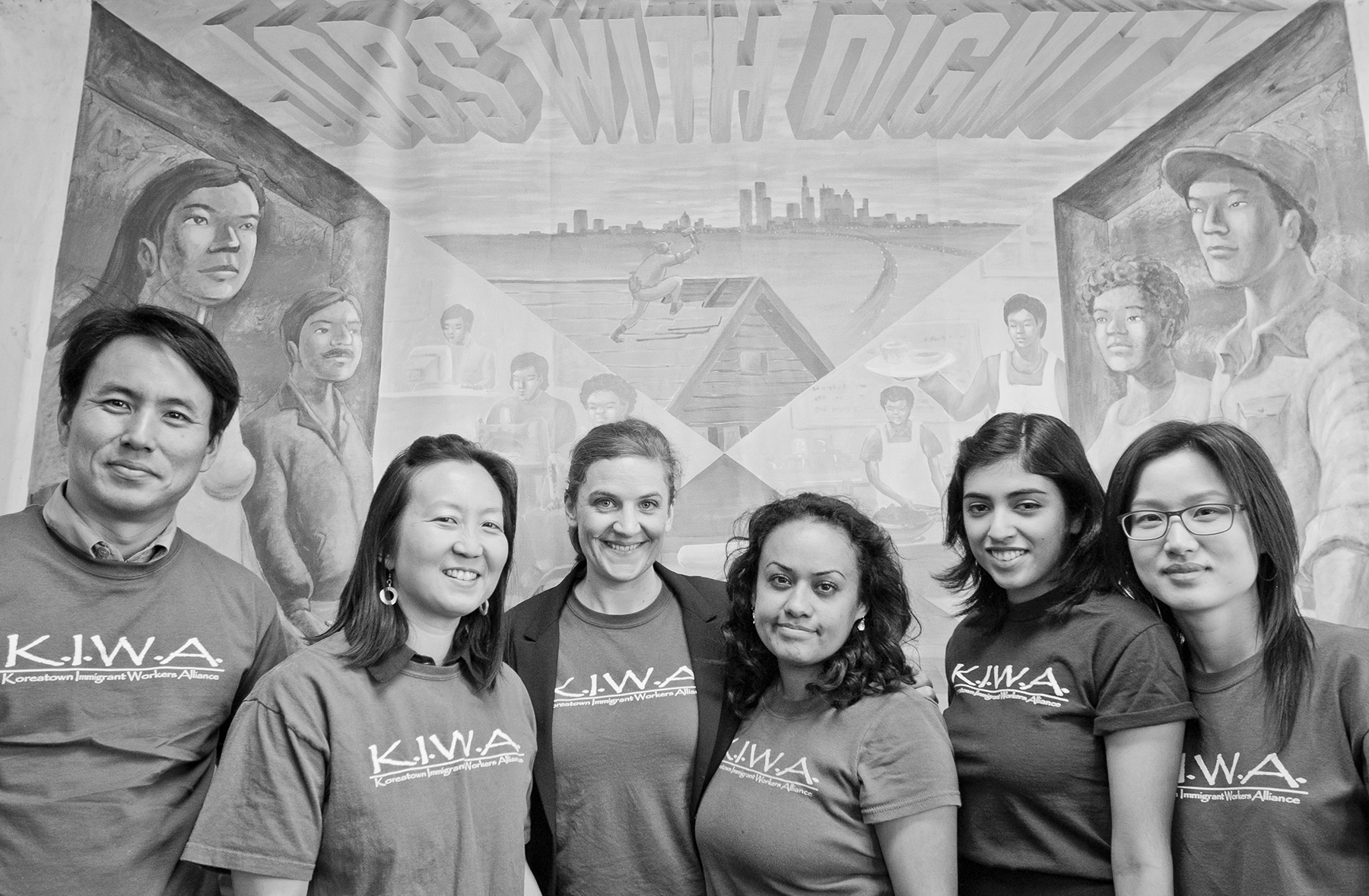
Members from the Koreatown Immigrant Workers Alliance at their building on Hobart Boulevard. KIWA advocates for Koreatown’s residents and workers who are the victims of wage theft. They also hold informational seminars for voting, taxes, and other social services needed in the community.
Additionally, a study by the Korean Youth and Community Center found that a lack of parks and affordable grocery stores were two major issues for Koreatown families. Based on 2008 figures, they found that the average household income in Koreatown was about one-half of the California median income at $30,558. This number is not far off from current figures (Lopez, 2014). As of 2010, the average income was $33,448 (Oh and Chung, 2013). What’s more, the organization found that those who used the center’s free tax preparation service made on average only $18,000 as of 2013 (Lopez, 2014).
Based on community surveys, the authors found that public parks played an important role for families as a place to congregate with friends while also providing a safe place for children to play. Currently, Koreatown has only two parks, Seoul International Park and Shatto Recreation Center. However, the two parks combined make up only 0.6 percent of the total area of Koreatown. With the area’s high density, each acre of park space serves 12,554 residents (Lopez, 2014). What’s more, with approximately 1,278 restaurants, bars, and coffee shops in Koreatown, Lopez found that very few of them provided inexpensive and healthy food for the area’s residents. During a 2.4 mile walk along Pico Boulevard from Crenshaw Boulevard to Hoover Street, she found 47 convenience stores and markets with only three of them providing a selection of fresh produce (Lopez, 2014).
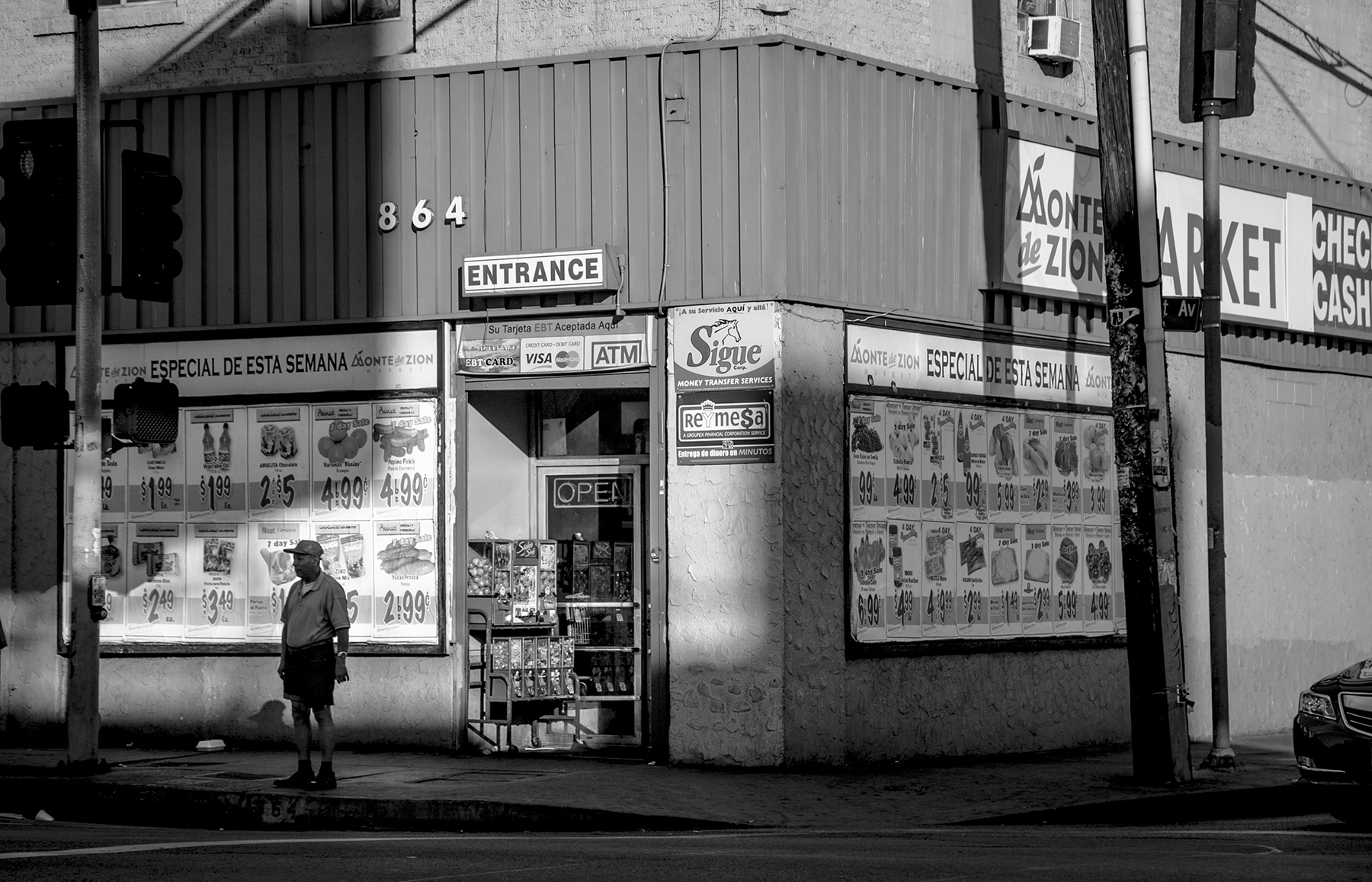
Zion Market is a Korean owned grocery store that caters to Spanish speakers on James M. Wood Boulevard and Vermont Avenue.
The aforementioned authors have shown in contrast to the influx of new development that at the level of social conditions, many of the concerns by local residents have become secondary to the geographic restructuring by outside interests. My aim for this project was to use photography to show these various levels of Koreatown’s multicultural community.
_________________________________________________________________________________________________________________
Abdulrahim, R. (2010). Little Bangladesh must grow into its name. The Los Angeles Times
Chang, E., & Diaz-Veizades, J. (1999). Ethnic peace in the American city. New York: New York University Press.
Chi, S. (2013). The origins of contemporary Korean immigration. In G. J. Yoo (Ed.), Koreans in America, (pp. 47 – 58). San Fransisco: Cognella, Inc.
Chung, J. (2013). The origins of contemporary Korean immigration. In G. J. Yoo (Ed.), Koreans in America, (pp. 47 – 58). San Fransisco: Cognella, Inc.
Chung, A., & Oh, S. (2013). A study on the sociospatial context of ethnic politics and entrepreneurial growth in Koreatown and Monterey Park. GeoJournal, 79, 59 – 71
Kang, K. H. (2013). The Seoul of Los Angeles: contested identities and transnationalism in immigrant space. UMI Dissertation Publishing, 1 – 40
Khocri, A., & Vincent, R. (2014) Koreatown luxury high-rise is sold for $283 million. The Los Angeles Times
Koreatown Immigrant Workers Alliance (2009). Reclaiming Koreatown: current and future needs of Koreatown residents.
Kwon, H., & Lee, C. (2009). Korean American history. Korean Education Center in Los Angeles.
Lee, Y., & Park, K. (2008). Negotiation hybridity: transnational reconstruction of migrant Subjectivity in Koreatown, Los Angeles. Journal of Cultural Geography, 25, 245 – 262
Lopez, E. (2014). Koreatown environmental report.
Park, K., & Kim, J. (2008). The contested nexus of Los Angeles Koreatown: capital restructuring, gentrification, and displacement. Amerasia Journal, 34, 127 – 150
Quinones, S. (2001). The Koreatown that never was. The Los Angeles Times
Sanchez, J., Aver, M., Terriquez, V., Kim, M. Y. (2012). Koreatown: a contested community at a crossroads.
Southern California Association of Governments. (2008). SCAG region: compass blueprint case study.
Shyong, F. (2012). L.A. Salvadoran community sees hope along a new corridor. The Los Angeles Times
Smith, M. (2000). Transnationalism and citizenship. Approaching Transnationalism, 15 – 38.
Tangherlini, T. (1999). Remapping Koreatown: folklore, narrative and the Los Angeles riots. Western Folklore, 58, 149 – 173
Yu, E., Choe, P., Han, S., & Yu, K. (2004). Emerging diversity: Los Angeles’ Koreatown, 1990 – 2000. Amerasia Journal, 30, 24 – 52
Zhou, M. (2009). How neighborhoods matter for immigrant children: the formation of educational resources in Chinatown, Koreatown and Pico Union, Los Angeles. Journal of Ethnic and Migration Studies, 35, 1153 – 1179
 CONTESTED SPACES